What Is a Diamond?

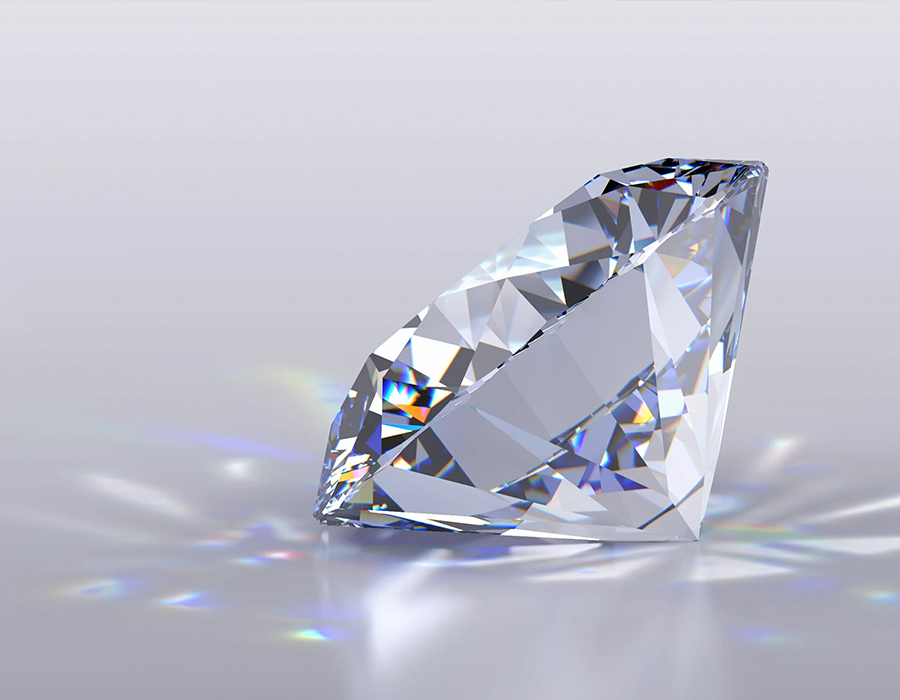
Over a billion years ago, deep beneath the Earth's surface, carbon atoms bonded tightly under high temperatures and extreme pressure, resulting in the world's hardest natural mineral: diamond.

Hidden for millions of years, diamonds only reached the Earth's surface after volcanic activity transported them upward in magma. Then, in the 4th Century BC, the first diamonds were found in India. Today, as they have been for centuries, diamonds are one of the most beautiful and coveted objects on Earth.

The Brilliant Earth Difference

From the day we were founded in 2005, we've set out to revolutionize the diamond industry. So, we pioneered a new standard with Beyond Conflict Free Diamonds® that surpasses the Kimberley Process to provide our customers with ethical, sustainable, and stunning diamonds. We are committed to continually transforming the industry for good: we know where our diamonds come from and share that information with you — so you can feel good about the jewelry you're wearing.​

Types of Diamonds

Natural Diamonds

Natural diamonds form deep within the Earth under extreme conditions of heat and pressure over billions of years. They are comprised of nearly 99.95% carbon—making diamonds the only gemstone constructed of a single element. They are the hardest naturally occurring materials found on Earth and gemstone-quality diamonds are one of the most sought-after. Because of their limited quantity, natural diamonds have been cherished for their enduring value and passed from generation to generation.

Lab Diamonds

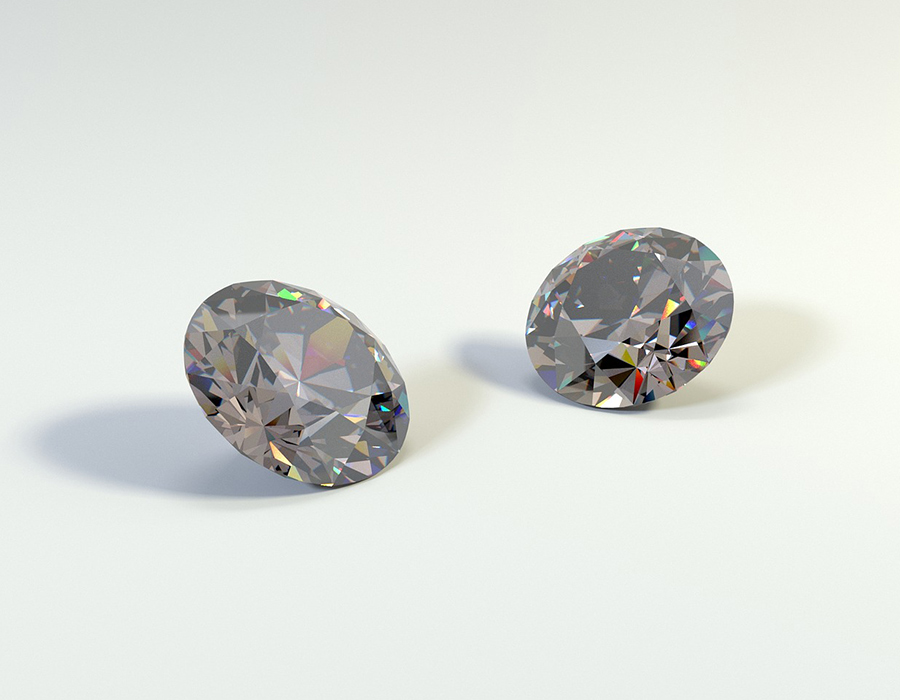
Lab diamonds are optically, chemically, and physically the same as natural diamonds. In other words, they look, feel, and are identical. Their difference lies only in their origins — natural diamonds form within the Earth, and lab diamonds are grown by professionals with specialized equipment. Another difference relates to cost; as lab grown diamonds are less rare than natural diamonds, they often come at a much more accessible price. Do you think you can tell the difference between lab grown and natural diamonds just by looking? Test your eye with these side-by-side images.


4 C's of Diamonds

If you're wondering what to look for in a diamond, the best place to begin is by understanding the 4 C's: cut, color, clarity, and carat. Created by the Gemological Institute of America (GIA) in the 1940s, the 4 C's act as a universal scale to describe and determine the quality of diamonds.

Cut

Cut is the proportion and arrangement of facets that determine a diamond's brilliance, sparkle, and fire. The scale ranges from Excellent to Poor.

Color

Color references the absence of color within a diamond. The scale ranges from D (colorless) to Z. Diamonds outside this range are considered 'fancy colored.'

Clarity

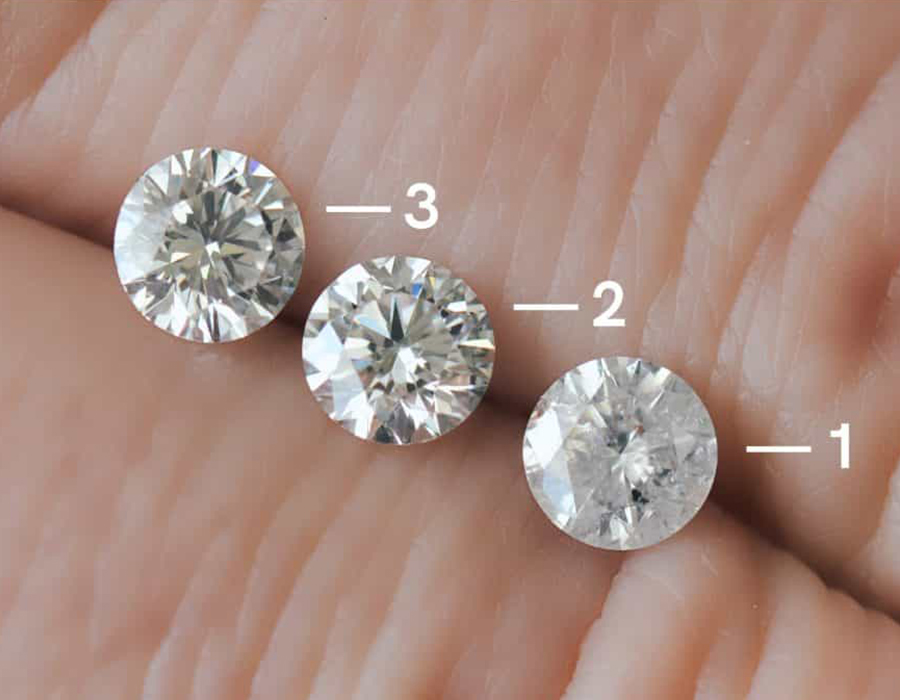
Clarity references the absence of internal inclusions and surface blemishes on a diamond. The scale ranges from Internally Flawless to Included.

Carat

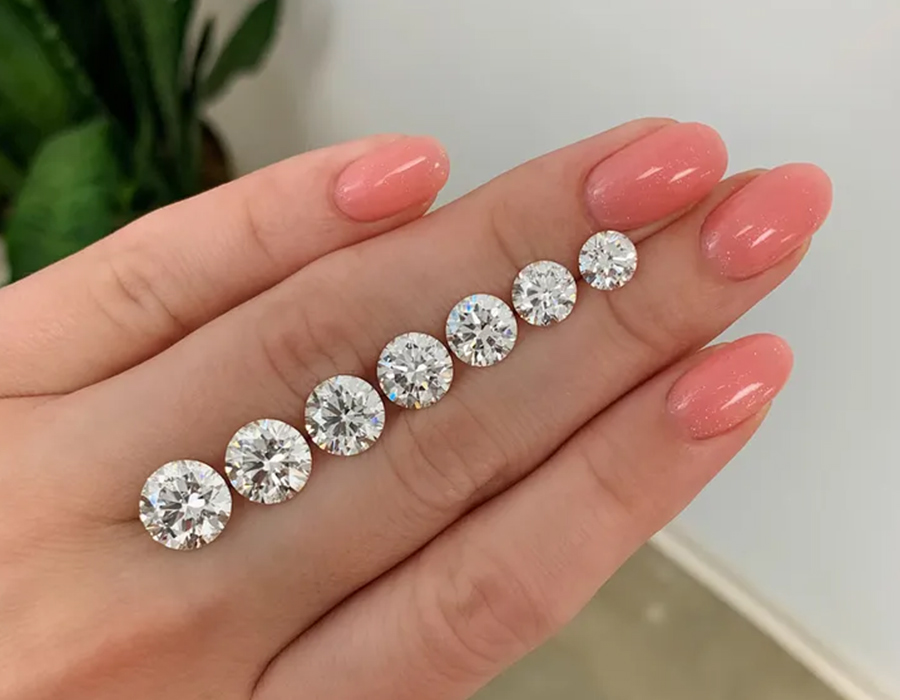
Carat is a measurement unit that describes a diamond's weight, not its size. One carat is roughly the weight of a paperclip.


Diamond Certification

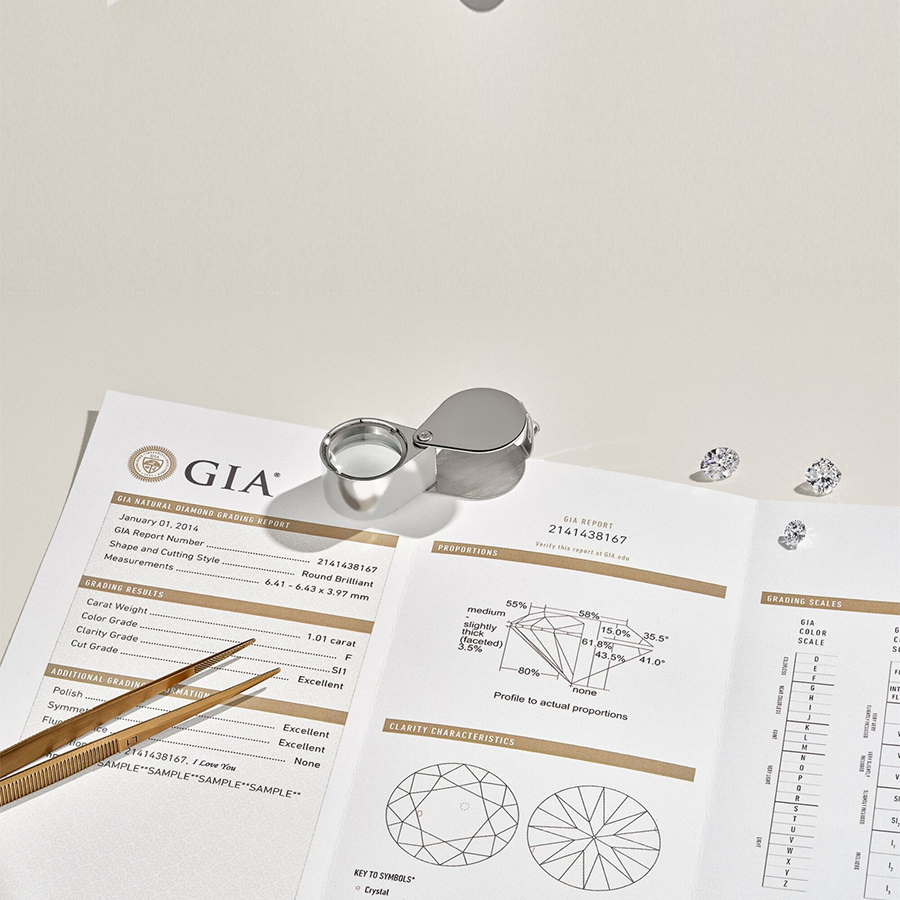
Many diamonds, including all Brilliant Earth diamonds, are certified by independent institutions such as the Gemological Institute of America (GIA), the International Gemological Institute (IGI), HRD Antwerp, and the Gem Certification & Assurance Lab (GCAL). To grade a diamond, trained professionals use specialized equipment to assess cut, color, clarity, and carat. They may also plot a diagram of its clarity characteristics and graphic representation of its proportions. Certifications may also include notes on symmetry, polish, fluorescence, shape, or measurements.

Certifications are essential as they detail not only the quality characteristics of your stone but also its authenticity. During the certification process, most diamonds are laser inscribed with a unique number that correlates to the number on its certification — meaning that, under magnification, you'll always be able to visually confirm that the diamond you have is the same one that was certified. We digitally deliver to customers with their purchase. Providing digital certifications in lieu of paper certifications decreases our paper use, the size of our packaging, and our shipping emissions, therefore reducing our carbon footprint.

Diamond Shape

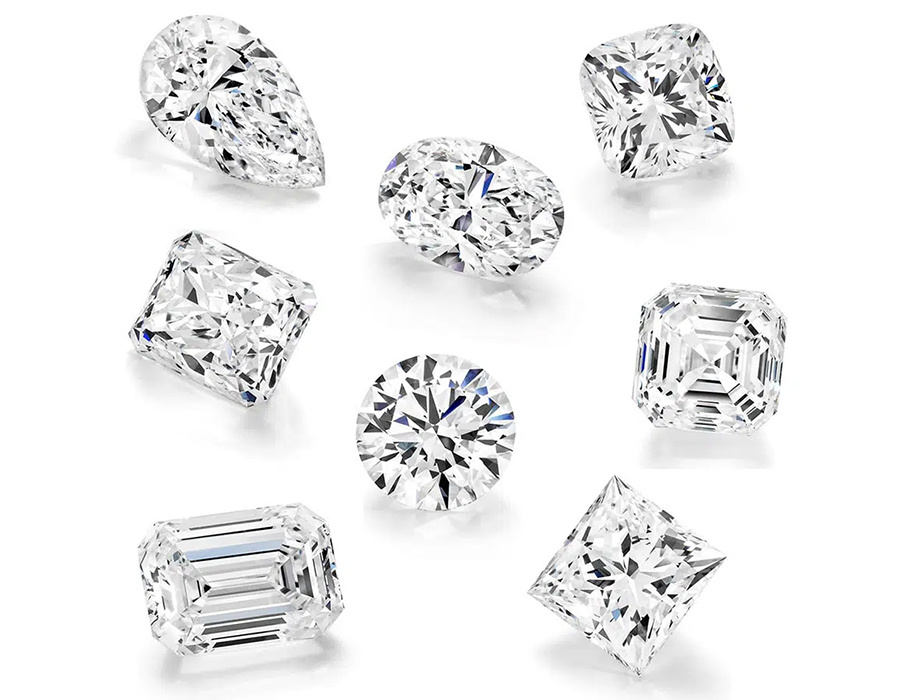
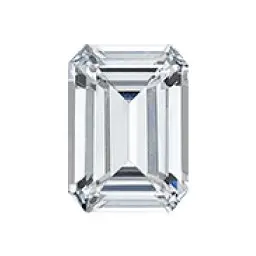
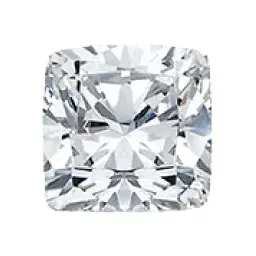
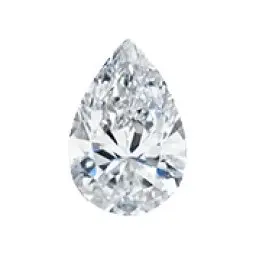
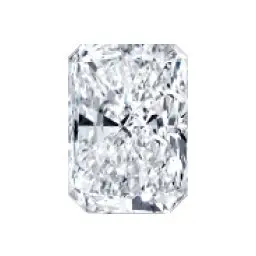
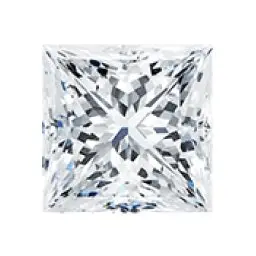
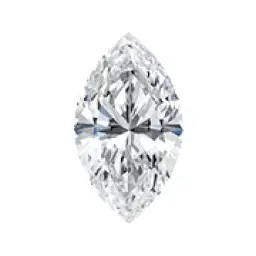
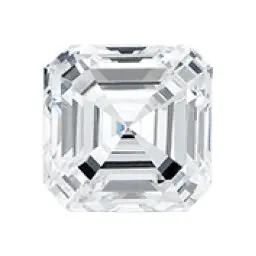
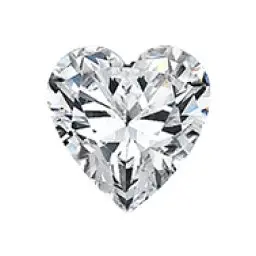
Shape refers to the external appearance of a diamond's outline. It is distinct from cut, which refers to a diamond's internal facet arrangement. The most popular shape is round, and any other shape (such as emerald, marquise, or oval) is considered a 'fancy shape.'

Diamonds by Shape

  • Round

  • Oval

  • Emerlad

  • Cushion

  • Pear

  • Radiant

  • Princess

  • Marquise

  • Asscher

  • Heart

Diamond Hardness

Diamond is the hardest naturally occurring mineral found on Earth. It is so hard that it ranks at the highest hardness level (a 10) on the Mohs scale, a rating system developed in 1822. The hardness of a diamond signifies its resistance to scratching — and it's true that only a diamond can scratch a diamond. Therefore, diamonds are ideal for everyday wear, making them perfect as center stones in jewelry as well as engagement rings.

Diamond Price

Diamond price varies greatly depending on rarity and quality. Diamonds with higher grades in cut, color, or clarity, or diamonds with a larger carat weight, are rarer and therefore more expensive than those with lower grades or carat weights. Lab grown diamonds are less rare than natural diamonds found in the Earth and are therefore less expensive.

Diamond Grading Scale

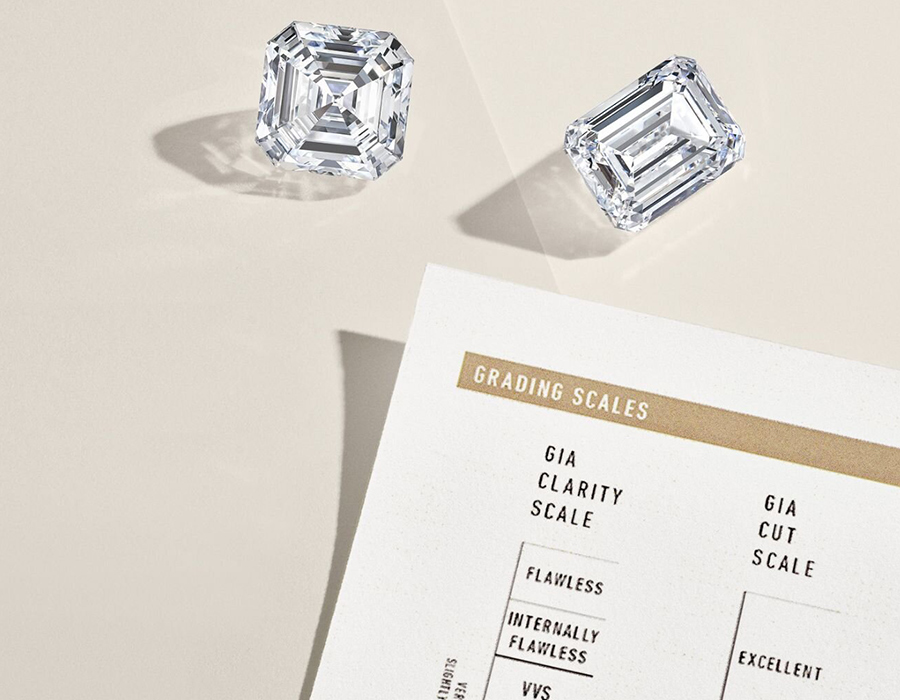
Diamonds are graded on a scale developed by the Gemological Institute of America (GIA) that analyzes cut, color, clarity, and carat. These 4 C's are universally acknowledged as the accepted standard in describing and determining the quality of any diamond.

How to Buy Diamonds

When deciding on your dream diamond, it's essential to do the following:

1. Study up on the 4 C's. To find the best diamond for you, learn to balance the 4 C's with your budget. If you're looking for a high-carat stone, you may have to sacrifice cut, color, or clarity to keep it affordable. Or vice versa, if you're looking for a colorless stone, you may have to sacrifice carat, cut, or clarity. And remember, no two diamonds are identical, and there's no right answer to how a diamond should look.

2. Pick your favorite shape. While round brilliant diamonds are the most popular, remember that there are many other shapes to choose from. Here at Brilliant Earth, we offer eight shapes in addition to round: oval, cushion, princess, radiant, emerald, marquise, pear, and asscher.

3. Make sure that it's certified. Your diamond must come with a digital or physical certification from an independent institution such as GIA, IGI, HRD, or GCAL to prove its authenticity and quality. All Brilliant Earth diamonds are certified, and any other diamond you're considering purchasing should be, too.

At Brilliant Earth, we're proud to offer our customers an incredible assortment of sustainable and ethical diamonds — in all shapes and sizes — so we suggest using our filters to navigate our diamond searches best. Once you've determined the shape and 4 C's you're hoping for, filter away to narrow it down to the perfect piece.

Our experts are also available 24/7 via chat, phone, text, and email to assist with questions big and small. If you're interested in viewing diamonds in person, schedule an appointment and come see us.
FAQ,s

To clean a diamond at home, soak it in warm, soapy water for 5 minutes. Then, use a toothbrush to carefully scrub it free of any dirt or grime. For more detailed cleaning instructions, read our How to Clean a Diamond Ring at Home guide and How to Clean Lab Grown Diamonds guide.

Diamond testers test for either thermal or electrical conductivity. Diamonds conduct heat very well, while most simulants do not. Thermal tests accurately identify diamonds (lab and natural), whereas electrical tests can sometimes yield false positives.

Gem quality diamonds remain quite rare, as most rough diamonds found in mines are low-quality and only used for industrial purposes.

Those born in April are the lucky recipients of diamond as a birthstone.

A diamond accent is a small diamond along the band or setting of engagement rings, wedding rings, or fine jewelry. Generally, accents are any other diamonds besides the center stone of a given piece.

An excellent cut allows a diamond's brilliance, fire, and sparkle to shine as brightly as possible.

Diamonds represent the birth month of April and are said to symbolize strength, love, and health in ancient lore.

To the untrained eye, it can be difficult to tell the difference between diamond and cubic zirconia. We recommend bringing your gemstone to a trained professional who can validate exactly what it is.

CVD stands for Chemical Vapor Deposition and references diamonds grown in a laboratory via CVD. CVD differs from HPHT (High Pressure, High Temperature), another commonly used practice to produce lab diamonds. Learn more in our Lab Diamond Guide.

A GIA-certified diamond is a diamond that was independently graded for quality and authenticity by the Gemological Institute of America.

Much like an accent diamond, a melee diamond is a tiny diamond set into the setting of a piece of fine jewelry. A diamond accent may be slightly smaller than a center stone, but melee is always very small.

Enhanced diamonds are those that have undergone specific treatment to improve either their clarity or their color. Brilliant Earth does not carry enhanced diamonds.